March 13, 2006

Traffic Light Logic 17

Yo! Have you checked out the Thesis Theme yet? I’d love to explain how optimized, detailed, and easily-customizable Thesis is, but honestly, I know that you’re going to benefit the most from the amazing community of theme users. Smart people offering up tailored solutions to common theme problems? Now that’s serious value.

During the summer of 2001, I worked at the Air Liquide corporate offices in Houston, TX, as a lowly intern. Besides sneaking out of work every day at 2:30 pm to go play golf, one of the things I remember most about my first experience in Texas is the way the traffic lights were configured. Weird, I know, but allow me to explain.
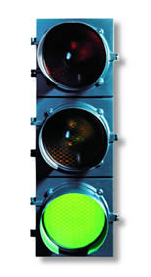
I’ve spent a considerable amount of time in both Louisville, KY, and Atlanta, GA, and the traffic lights work the same in both places. Specifically:

  • Lights are hung vertically
  • Most important, left turn signals turn green BEFORE the lights that allow cars to go straight through a particular intersection

In Texas, however, traffic lights are different, at least in urban markets like Houston and Austin. Instead of vertical lights, the lights are hung horizontally. More important, however, is the fact that the left turn signals go off AFTER the straight traffic has been allowed to proceed through the intersection.
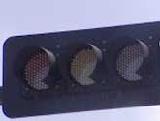
When I first noticed this difference in traffic light configuration back in 2001, I thought about it for a second and decided there was no real advantage to either setup. I just figured that this was how they did things in Texas, because - you know - Texans want to be different.

When I arrived in Austin for this year’s SXSW and hopped in the rental car, I immediately encountered these silly horizontal traffic lights, and that got me thinking about the subject once again. I hadn’t made a return trip to Texas since 2002, and an interesting thing had happened to me in the meantime.

In 2003, I got in a terrible accident in Atlanta. Basically, a random dude was waiting to take an unprotected left hand turn (without the green turn arrow) across three lanes of traffic at a busy downtown intersection (you’ve seen these people - they try and make their turn after the light has turned red, and they do so because they’re stuck out in the middle of the intersection). I was going straight through the intersection and had gunned it to try and make it through the yellow light. Because of the yellow light, the rest of the straight traffic had begun to stop, and the guy making the unprotected left hand turn decided to sneak across three lanes of traffic because he was blocking the middle of the intersection. I was going about 50 miles an hour, and this guy seemingly popped up out of nowhere and was now directly in front of my car. With a stab of the brakes, a miracle, and some good slalom driving, I managed to guide the car through a sea of street signs, traffic poles, telephone poles, and store marquees, and I only hit a tension wire that was attached to a telephone pole. I walked away from the crash without so much as a scratch. My car was totaled.

So, fast forward to Austin in 2006, and I’m sitting here looking at these silly horizontal traffic lights, waiting for my left arrow to turn green so I could get rolling. Of course, this got me thinking, “Why the hell do the turn arrows go AFTER the straight green lights?”

Then it hit me.

SAFETY! With engineering and logistics, the most common reason for an otherwise inexplicable method of operation is a safety underpinning, and I believe this is precisely why the Texas traffic lights are configured thusly.

Think about it: if the turn arrow is the last to go, then people aren’t going to be planted out in the middle of the intersection waiting for their chance to gun it across three lanes of traffic, just so they won’t have to wait through another light cycle. Although I haven’t done any research on the topic, I’ll bet good money that unprotected left hand turns are the number one cause of accidents in typical intersections. People make idiotic decisions in the name of avoiding another light cycle, and gunning it after the light has turned red is pretty tempting in our hustle-and-bustle world.

Given my accident history, I immediately became fascinated with this idea. In fact, I couldn’t go to sleep last night because I was thinking about it so much. If you can get over the fact that I’m a total geek for that, you might actually identify with my thinking here. I could have gotten seriously injured (or worse) that day in Atlanta, and I absolutely believe that my decision-making would have been completely different if the traffic lights there mirrored those in Texas. First of all, circumstances would not have been the same, and second, other people’s driving habits change because of the nature of the system. Everybody is forced to make more rational, sane driving decisions because they aren’t given this opportunity to whip it across traffic in order to make a left hand turn.

I think it’s genius.

In fact, I think it’s so genius that I’d like to see every major US city adopt this traffic light configuration. Not changing is sheer negligence, in my opinion. Kentucky, my home state, runs a program on the TRIMARC signs around Louisville that shows the number of deaths on Kentucky roads each year. Between 2004 and 2005 (the only two years for which I have quick data), there was no progress in this area. I think a logistical change on traffic light configuration would make a significant dent in the number of deaths in Kentucky each year, despite the fact that it’s basically a rural state. In Atlanta, the impact would be far more noticeable, as traffic there is not only more dense, but also more hectic.

I think maybe I need to make a public policy push for this in eastern US markets. I suppose that because it affected me personally, I’m probably more inclined to champion this cause. Regardless, I’m going to see what I can do about this. Safety is important, and accidents are just a pain in the ass!

17 Comments ↓

#Devin  at 3:46 pm on Mar 13, 2006

Depending on the time of day some of them here will do the left turn signal after or before. It just depends on how it wants the traffic to flow and in which direction. Interesting post though… geek.

#Anonymous  at 5:07 pm on Mar 15, 2006

who was doing the driving and why? ha ha. you forgot to tell them that. blllllllllll

#Jennifer Grucza  at 1:28 pm on Mar 16, 2006

For busy streets with no left turn arrow, sometimes the yellow light is your only chance to make a left turn.

Of course, then there’s Boston, where left turners often dart out first, before oncoming traffic. That really took me by surprise when I started driving here.

Another thing about Boston is there are these delayed greens, where you’re supposed to someone magically know that you can turn left because the other direction is still red. They don’t bother to add a green arrow. So basically you just have to memorize which intersections these are, and keep a watch on oncoming traffic to see when they start moving.

#tfro  at 12:18 pm on Mar 26, 2006

well, luckily you were OK in that little incident. But it led you to see the light in cars…

#Chris P.  at 1:14 pm on Mar 26, 2006

Long live the Bimmer!

#Chris  at 1:23 am on Jun 28, 2006

I, too, think about traffic patterns in my spare time; mostly while sitting in traffic. I just moved to Pittsburgh where almost every intersection is adorned with a dedicated left-turn lane. Initially I thought this was odd, but a little deduction revealed that this configuration makes much more sense than the dedicated right-turn lane. Since you can almost always make a right on red, the right lane almost always flows better than the left; there will always be people waiting to make a left-hand turn against oncoming traffic.

The dedicated left-turn lane segregates the traffic that normally holds up unawares straight-ahead drivers, thus reducing the number of impatient people who make ill-conceived jumps out of the left lane (that is stalled) into the free-flowing right-lane. Used in conjunction with the Texas delayed turn I think we might be onto something!

#Neuman  at 4:18 am on Nov 26, 2006

“you’ve seen these people - they try and make their turn after the light has turned red, and they do so because they’re stuck out in the middle of the intersection” — quote from you.

“If you enter an intersection while the light is green, you may finish your turn even though the light turns red.” — quote from traffic manual.

” I was going straight through the intersection and had gunned it to try and make it through the yellow light.” — you.

“People make idiotic decisions in the name of avoiding another light cycle, and gunning it after the light has turned red is pretty tempting in our hustle-and-bustle world.” — you.

Now, given these quoted I think you are the idiotic and hypocritical driver who’s too caught up in getting through the light to not waste another cycle. As I almost got hit by one of you idiots… learn how to drive, and ffs stop on yellows.

#Chris P.  at 11:54 am on Nov 26, 2006

Neuman,

I know you think you’re slick and caught me in some kind of contradictory statement, but the entire reason I wrote this post was to place an emphasis on safety.

I said that people make idiotic decisions to avoid light cycles, and I was acknowledging the fact that I had made a poor decision that resulted in a terrible accident.

By writing this, I had hoped to clue people into some of the dangers here, and I also think that there is simply a better, safer way to construct traffic light cycles.

#Andrew  at 11:16 am on Feb 21, 2007

The simple answer is build a roundabout - they reduce fatal accidents at intersections by up to 90% and improve traffic flow.

http://www.fhwa.dot.gov/crt/lifecycle/roundabouts.cfm

#Luke  at 3:40 pm on Apr 25, 2007

Problem is, people generally hate roundabouts…I know I do. I probably shouldn’t have moved to Massachusetts.

#Avent  at 8:43 pm on Sep 26, 2007

Appreciated your story and like everyone I contemplated the same problems while setting in traffic. I was wondering who the police blamed for your accident. From where I sit, both drivers were equally at fault, bad judgement on both sides. I know this is old saying but if you are going make an error, “ere’ on the side of caution”. Hmmm..could this be called “defensive driving”.

This is a terrible traffic problem that needs to be address and at the least some kind of continuity across the nation. Red states>horizontal, Blue states >Vertical????????? HehHeh…….

#Robert  at 2:58 pm on Nov 17, 2007

Sadly, in Michigan, there is great inconsistency in how the left-turn lights are timed, usually involving different municipalities (although some municipalities have both!). I do prefer the latter, which seems to be more prevalent.

Newer left-turn signals in Michigan, though, installed in the last couple of years, are confusing, though, because they have two yellow left arrows. I looked up signals in the MUTCD, and this configuration is not supported. I just think it’s stupid. (Older left-turn signals in Michigan have a “LEFT” sign, with red and yellow circles and a green arrow; the new signals are all arrows.)

The problem with roundabouts is the thinking that people who want to go straight, *want to go straight through*. They don’t want to have to stop and make a looparound.

#Anonymous  at 9:23 pm on Jan 5, 2008

When you are sitting at a green light with no left turn arrow, you are supposed to move into the intersection and wait for the light to change or for a space in the oncoming traffic to make the left turn. If there is no space in the oncoming traffic you are supposed to wait for the light to change to red and the oncoming traffic to stop to make the left turn. The law allows for 2 vehicles to make the left turn at this point. You must be alert and quick to make the left turn before the cross traffic starts to move.

#Dave  at 6:06 am on Mar 23, 2008

How about an article on Wordpress safety? Lots of folks are getting hacked, and you’re a big voice out there bringing people to Wordpress. Security is a big issue, and it’s never going to get smaller. I couldn’t find an article on your blog (show me if I missed it) about this.

#Kev  at 11:26 pm on Jul 9, 2008

What you’ve described is known among traffic engineers as the “Yellow-Trap” problem. Solved by left turn signal timing as you’ve observed. Check out this page for more traffic geekiness.

#Bry  at 8:22 am on Jul 17, 2008

I got into the same situation the other day with making a left turn on a yellow light. My car is now gone. I believe sometimes it can be the drivers fault who is driving pass the yellow light. I learned in my drivers ed class: “Yellow means prepare to stop, or slow down!” As I was turning the driver failed to slow down while all the other cars have and she hit me! Isn’t it against the law to run or speed up to a yellow light? I guess everyone should speed when they see yellow.

#Mike K  at 2:11 pm on Nov 11, 2008

I know what you’re talking about with the late cycle left turn arrows.

I live in Denver and only a few intersections have this (most are still early cycle left turns before the straight traffic goes across) but it’s starting to catch on, especially in the suburbs. Some intersections have it where everyone on one side gets the straight and the left turn, then the otherside can go straight and then later the other side gets the left turn and that other side turns red at the same time.

As far as horizontal signals go, I’ve heard so many reasons why some states do this. I’ve heard “to be different” all the way up to “reducing down on wind resistance that could potentially damage the light.” I’m thinking it’s moreso to be different because we get a LOT of wind in Denver and all of our signals are vertical. There is ONE intersection where it’s horizontal and it’s in the middle of a large office park in a pretty well-off part of the metro area.

Chicago gets a lot of wind too and all of theirs are vertical.

Hoot and/or Holler ↓